
Boutique Hotels · Stay
The Painted Lady Hotel
About
On 2nd Avenue South in Birmingham’s Southside, in the Automotive Historic District, a three-story brick building known as the Eyer-Raden Building has stood since around 1895. Today it operates as The Painted Lady Hotel, an upscale boutique property that trades the polish of a chain hotel for the creak of original floors, a preserved central staircase, and a design sensibility its owners describe as bold and modern layered over thoughtful historic comfort. The building’s past is part of its pitch: local lore holds that it once served as a boarding house and, by some accounts, a brothel connected to Louise “Lou” Wooster, a Birmingham madam later remembered for nursing the sick during the city’s 1873 cholera epidemic. That history shows up in the hotel’s branding and in one of its rooms, Madame Lou’s Room, named directly for her.
The hotel has no elevator, a detail worth knowing before booking a third-floor room, but it is presented as a feature rather than an apology: the original staircase remains intact and in use, one of several period details the ownership chose to keep rather than renovate away. Guest rooms are split across five named categories rather than generic numbered types. Trellis Rooms, available with king or queen beds, form the entry-level category. Camellia Garden rooms, also king or queen, sit on the second and third floors. Celestial Study rooms come with king beds on the second or third floor, Pink Pagoda is a king room specific to the third floor, and Madame Lou’s Room, the hotel’s namesake suite, is a king room built around the building’s Lou Wooster backstory.
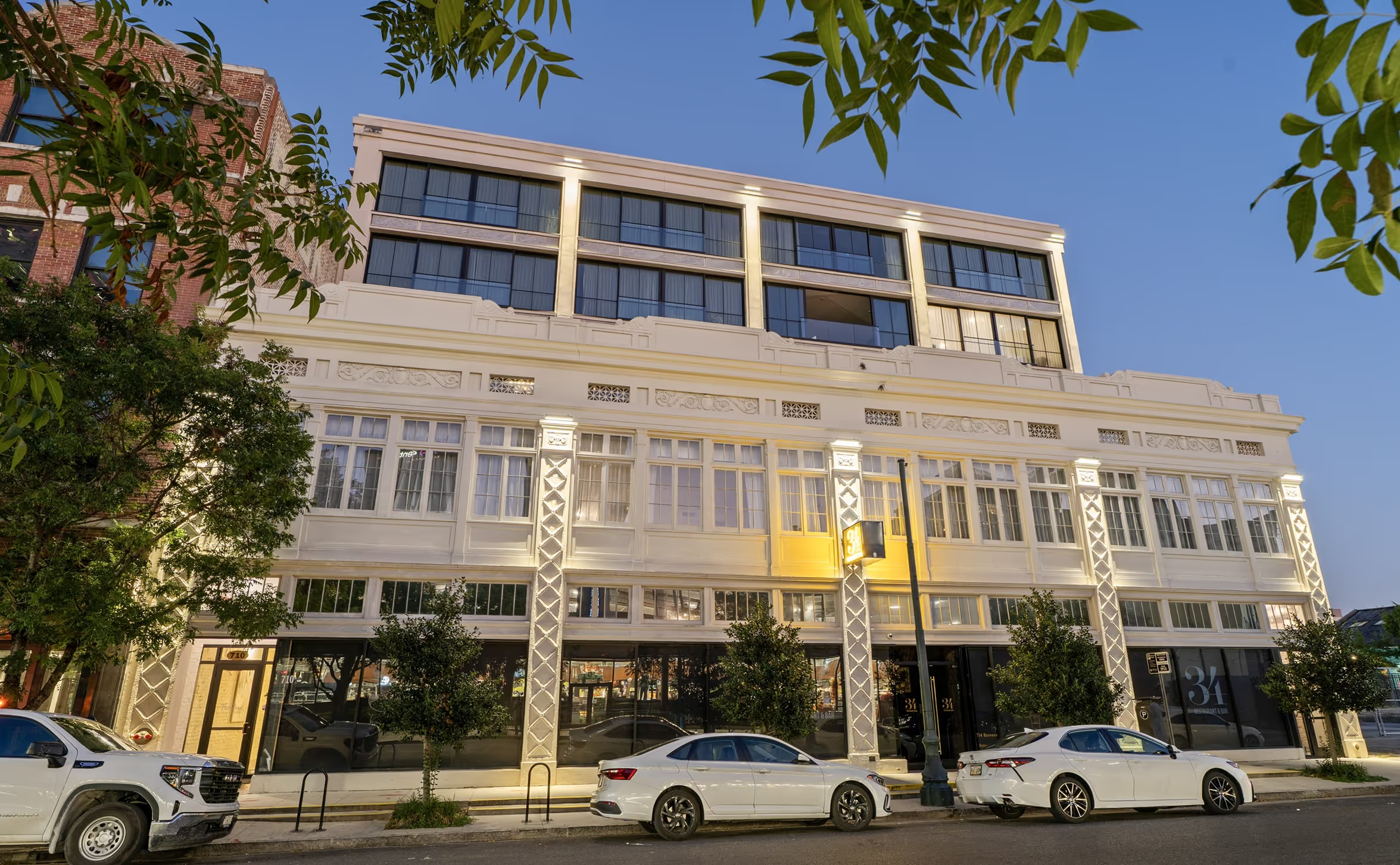
Every room includes free WiFi, and the hotel offers free on-site parking and daily housekeeping, amenities that are not a given at small independent hotels in older buildings. It is also pet-friendly, a point the property markets directly to travelers who would otherwise have to board an animal or skip a trip. The overall feel leans toward relaxed luxury: exposed brick and original woodwork are kept visible, but furnishings, lighting, and bathrooms have been modernized, and the design team leaned on rich color and pattern rather than a stripped-down minimalist look, which is where the “Painted Lady” name comes from as much as any specific room.
Location is one of the hotel’s stronger selling points. It sits about a mile from the University of Alabama at Birmingham and the surrounding medical district, making it a practical option for families visiting patients at UAB Hospital or Children’s of Alabama, as well as for business travelers with meetings at Regions Bank or events at Regions Field. The hotel’s own materials note it is within walking distance of roughly a dozen Michelin-guide-recognized restaurants, part of Birmingham’s broader reputation as a Southern food city, and it is close enough to the Birmingham Civil Rights Institute, the Vulcan statue, and the Amtrak terminal (about six blocks away) that a car is not strictly necessary for a weekend visit built around downtown and Southside.
Booking runs through the hotel’s own reservation system rather than a major OTA-first listing, and guests can also reach the property directly by phone or email for questions about accessibility, given the lack of an elevator, or about pet policies before arrival. Because the hotel is a small, independently branded property rather than part of a national flag, room availability is limited compared to a larger downtown hotel, and travelers visiting during UAB events, Birmingham conventions, or graduation weekends should expect to book further in advance. For anyone drawn to Birmingham’s Southside neighborhood, with its mix of historic housing stock, restaurants, and walkable blocks near the medical district, The Painted Lady Hotel offers a lodging option that leans into the building’s age and backstory instead of smoothing it over, giving visitors a stay that feels distinct from the convention-hotel options clustered closer to the BJCC.