
Attractions & Museums · Things to Do
Mobile Carnival Museum
About
Mobile, Alabama holds the distinction of hosting the oldest organized Carnival celebration in the United States, and the Mobile Carnival Museum is where that three-century story is told in full. Housed in the historic Bernstein-Bush mansion on Government Street, the museum chronicles Mardi Gras traditions that predate New Orleans’ by more than a decade, tracing the holiday from its French colonial roots through the mystic societies that still parade every winter.
The museum is operated as a history museum dedicated specifically to Carnival culture, and it treats the subject with the seriousness of any civic archive. Visitors move through galleries filled with royal court gowns, jeweled crowns, and trains that stretch many feet across the floor, each piece donated or loaned by the mystic societies that commissioned them. Historical photographs dating back to 1886 line the walls, offering a visual timeline of how celebrations, costumes, and public participation have changed since the nineteenth century.
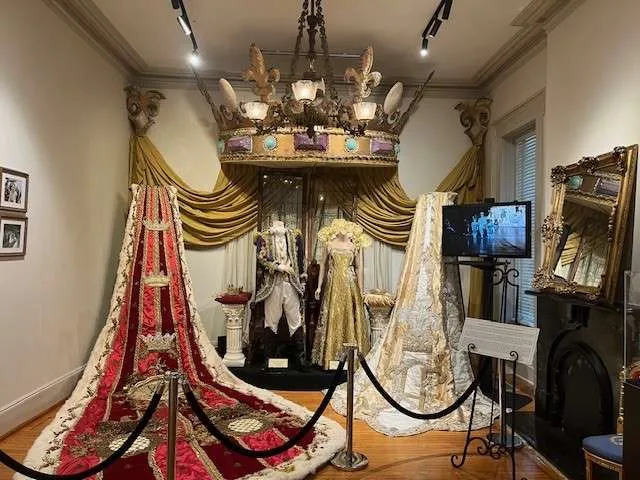
One of the highlights is the Coronation Gallery, where visitors can see the elaborate regalia worn by Carnival royalty, an annual ritual that has anchored Mobile’s social calendar since the mid-1800s. Nearby, the Mystic Gallery walks through the secretive mystic societies (locally called “mystics”) that build the floats, plan the parades, and fund the celebrations that bring hundreds of thousands of people downtown each year. Interpretive panels explain how these societies formed, how membership works, and how the traditions have been passed between generations of Mobile families.
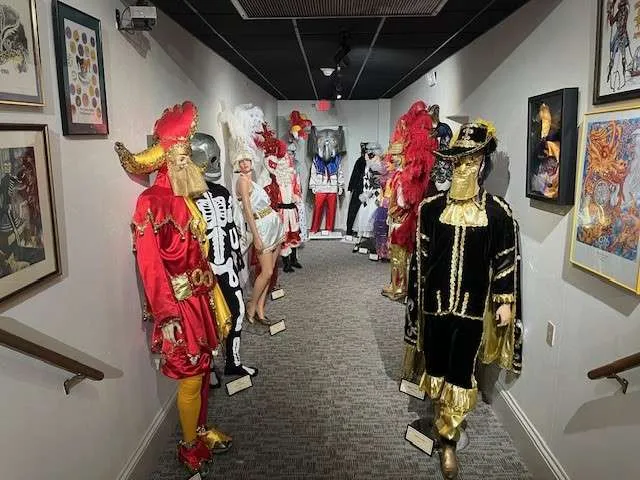
Beyond the permanent collection, the museum rotates thematic exhibits that dig into specific corners of Carnival history, from the evolution of float design to the role of African American mystic societies in shaping the modern celebration. Guided tours run at set times throughout the day and are included with admission, giving first-time visitors context that self-guided browsing might miss. The museum also maintains a small gift shop stocked with Carnival-themed keepsakes, books on Mobile history, and items connected to the city’s mystic societies.
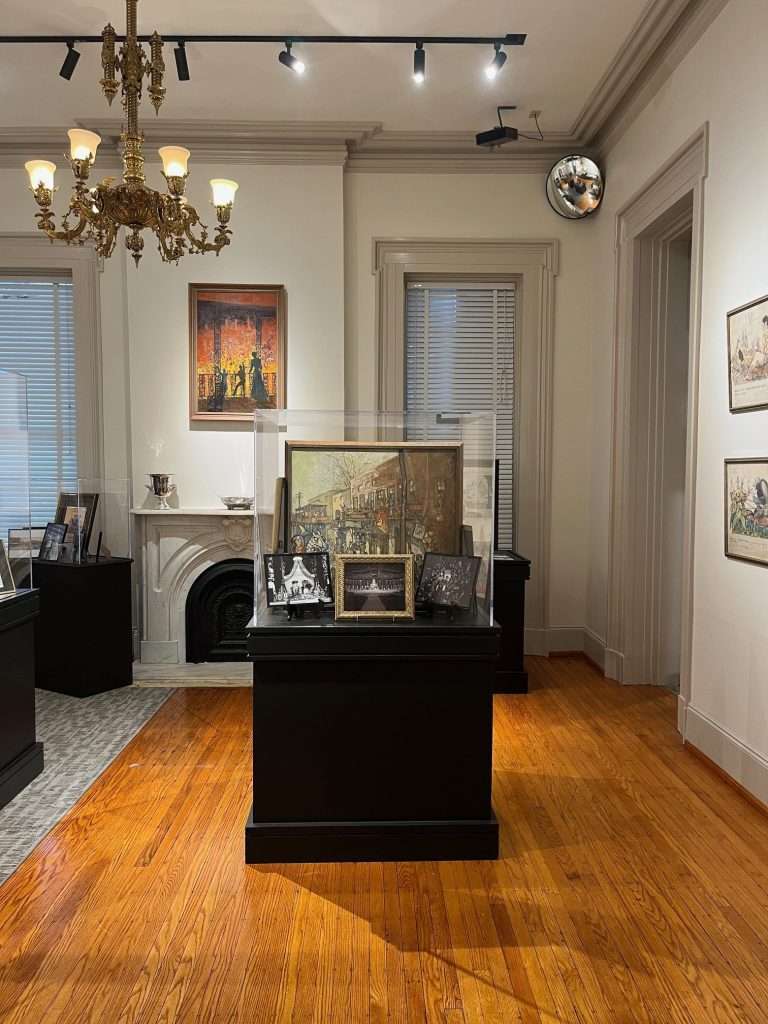
For visitors who only know Mardi Gras as a New Orleans export, the Mobile Carnival Museum makes the case that the tradition actually began along Mobile Bay, and that the city’s version, with its throws, masked balls, and family-oriented parades, has its own distinct character. The Bernstein-Bush mansion itself adds to the experience, its period architecture and formal rooms giving visitors a sense of the era when Mobile’s elite hosted the earliest Carnival balls.
The distinction between Mobile and New Orleans Carnival traditions comes up often on the guided tours, and docents are quick to point out the differences: Mobile’s parades tend to be more family oriented, its mystic societies operate with less public visibility than New Orleans krewes, and its celebration stretches across a longer calendar of smaller parades rather than concentrating everything into a single massive event. Understanding those distinctions gives visitors a better frame for anything else they encounter around the city related to Carnival, from street names to seasonal storefront displays that pop up each winter.
School groups and out-of-town visitors alike make up a steady share of the museum’s traffic, and the staff are accustomed to tailoring the guided tour depth depending on the audience, spending more time on costume construction techniques for a group interested in the craftsmanship, or more time on the social history for visitors curious about how mystic society membership has shaped Mobile’s civic life for generations. That flexibility makes the museum work equally well as a quick history primer or a slower, detail-oriented visit for return guests.
The museum is open Monday, Wednesday, Friday, and Saturday, with guided tours offered at set morning and afternoon times. It sits within easy walking distance of other downtown Mobile attractions, making it a natural stop for anyone spending a day exploring the historic district. Because Carnival season runs from just after New Year’s through Fat Tuesday, a visit any time of year offers a way to understand the celebrations that shape so much of Mobile’s civic identity, even for travelers who won’t be in town for the parades themselves.