Bars & Nightlife · Breweries · Food & Drink
Fairhope Brewing Company
About
Fairhope Brewing Company sits in downtown Fairhope, Alabama, where it opened its doors on January 6, 2013, as what its founders billed as Lower Alabama’s first production craft brewery since Prohibition. The idea traces back to Michele Kane, who spent time in Alaska frequenting the taproom at Alaskan Brewing Company and came home wondering why the Alabama coast had no equivalent of its own.
Kane’s husband Brian signed on immediately, and the pair rounded out a five-person founding group with homebrewer Dan Murphy, Gabe Harris of the beer-advocacy group Free the Hops, and Jim Foley, a law school friend of Brian’s. The first test batch went into the fermenter on December 21, 2012, a date the founders joked about given the Mayan calendar predictions circulating that year. Two weeks later the taproom opened for business with just two beers on tap, Everyday Ale and Section Street Wheat.
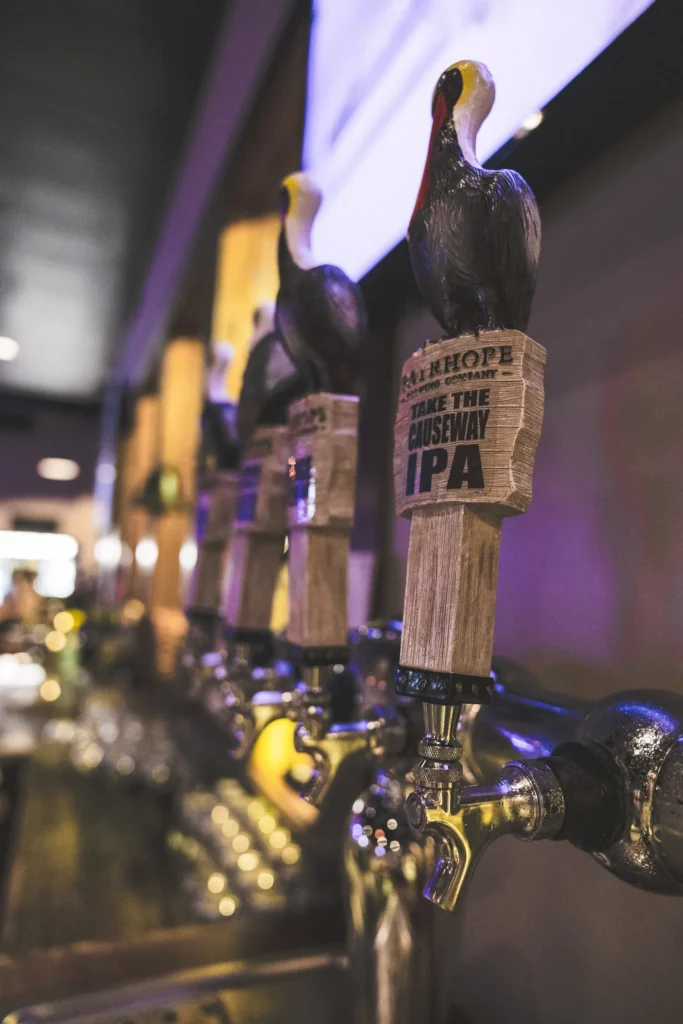
The lineup has grown considerably since that first pour. Six year-round beers now anchor the tap list alongside rotating seasonal and experimental releases. Cheap Sunglasses, a 4.2% Kolsch-style golden ale, is fermented with Kolsch yeast for a smooth, light-hop finish built for drinking on the patio. Take the Causeway, an 8.2% American IPA loaded with Citra and Simcoe hops, delivers the hoppier end of the lineup, while Fairhope 51, a 5.8% American pale ale brewed with Falconer’s Flight and German hops, splits the difference. I Drink Therefore I Amber offers a deep caramel-colored amber ale at 5.4% built for broad appeal, and Blue Steel, a 5.4% blueberry and lemon sour, balances tart citrus against light berry sweetness. Pink Delicious rounds things out as a 5% pink lemonade hard seltzer for drinkers who want something lighter than beer.
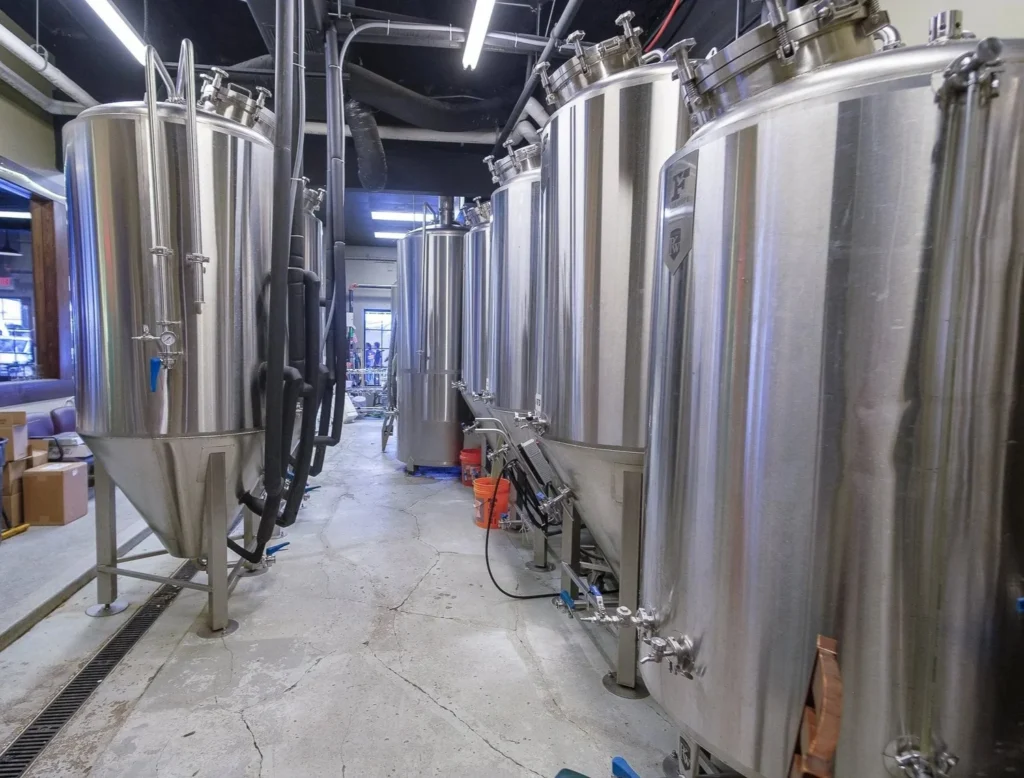
Production has scaled right along with the beer list. The original system, a 10-barrel, two-vessel brewhouse from Portland Kettleworks paired with five fermenters, still runs today. After about two and a half years in business, the brewery added a second, larger production facility built around a 30-barrel, three-vessel brewhouse from Premier Stainless, seven 60-barrel fermenters, and a six-head CODI canning line, tucked behind the mural that faces Nichols Avenue.
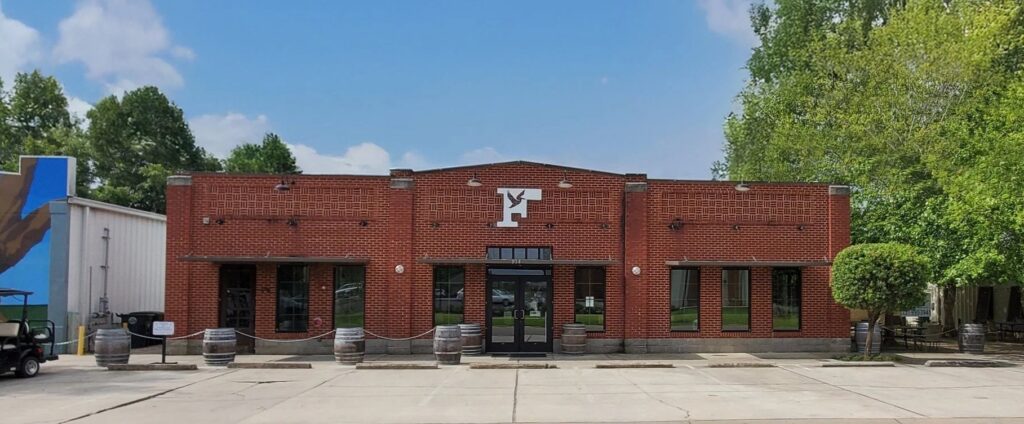
The Fairhope taproom runs as a BYOF operation, meaning there is no in-house kitchen; instead, food trucks post up outside on a rotating schedule so visitors can pair a plate with whatever is fresh off the line. Well-behaved dogs and kids are welcome inside, and live music fills the space on weekends. The taproom also hosts private events of various sizes for groups looking to rent out the space.
Inside, the taproom leans into a fish-themed decor with wall art, neon signage, and rows of wooden tables and chairs that give the space a casual, order-at-the-bar feel rather than a formal restaurant layout. Guided brewery tours can be booked through the taproom’s ticketing platform for visitors who want a closer look at the original Portland Kettleworks system before settling in with a pint, and a newsletter keeps subscribers updated on new can releases and seasonal taps as they roll out.
In 2023 the brewery expanded beyond Fairhope with a second taproom in downtown Mobile, giving Gulf Coast drinkers another spot to find the core lineup on draft. Cans distributed from the Nichols Avenue facility now reach bars, restaurants, and package stores across the Gulf Coast, carrying the Fairhope name well beyond Baldwin County. Between the original small-batch brewhouse and the expanded production facility, the operation has grown from two beers on opening night into one of the more established names in Alabama craft beer.
The Fairhope taproom remains the flagship location even with the Mobile expansion, and it is where the founding story is most visible, from the mural on Nichols Avenue to the original brewhouse still turning out small batches more than a decade after that first fermenter filled up in December 2012. For a brewery that started with a single question about why Lower Alabama lacked a craft brewery of its own, the current footprint, spanning two taprooms, two brewhouses, and Gulf Coast-wide distribution, answers that question in full.