
Outdoors & Recreation · Things to Do
Mobile Botanical Gardens
About
Tucked behind Museum Drive on the edge of Mobile, Alabama, Mobile Botanical Gardens spreads across more than 100 acres of designed gardens, woodland trails, and a rare stand of conservation longleaf forest. It’s a scale that surprises first-time visitors expecting a compact municipal garden; instead, the property functions almost like a nature preserve with cultivated garden rooms woven through it.
The gardens are run as a private nonprofit organization supported by a mix of public and private funding, and that independence shapes how the property is used. Rather than a single formal layout, Mobile Botanical Gardens is organized into distinct collections, including azalea and camellia gardens that reflect two of the plants most closely associated with the Gulf Coast, along with a dedicated pollinator garden built to support native bees, butterflies, and birds.
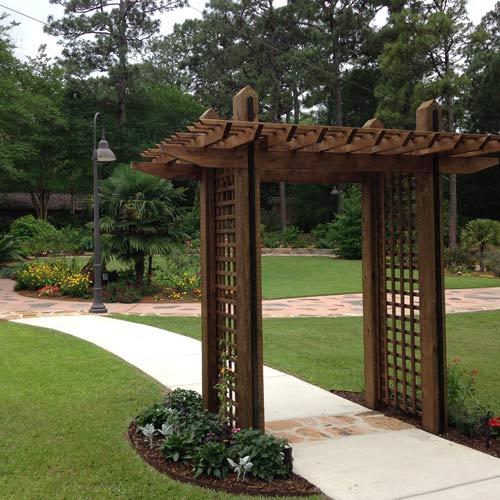
Beyond the cultivated garden rooms, the woodland trails lead into a longleaf pine conservation forest, a habitat that once covered vast stretches of the southeastern coastal plain and is now uncommon in its intact form. Preserving that ecosystem is part of the organization’s broader mission, tying the gardens to regional plant conservation rather than treating them purely as an ornamental attraction. Walking trails wind through the forest and connect back to the more formally landscaped sections, giving visitors the option to move between a manicured garden and a genuine woodland walk within the same visit.
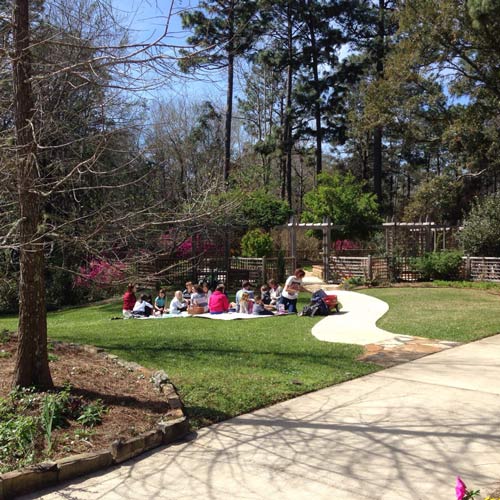
Shaded picnic areas scattered across the property make it a practical spot for families to spend an unhurried afternoon outdoors, and the gardens’ size means it rarely feels crowded even during peak bloom seasons in spring. The grounds also support rentals and private events, with several garden settings available for weddings, receptions, and gatherings, adding a revenue stream that helps fund the nonprofit’s conservation and horticultural work year-round.

Because Mobile Botanical Gardens is member-supported, admission and membership fees go directly toward maintaining the property and the educational programming built around it, including plant sales, workshops, and community classes tied to Gulf Coast horticulture. For visitors looking to get outside without leaving city limits, or for locals wanting a repeat destination that changes with the seasons, the gardens offer one of the larger green spaces in Mobile dedicated specifically to plant collections and native habitat rather than sports fields or playgrounds.
Seasonal plant sales, run by the gardens’ volunteer and staff horticulturists, give home gardeners around Mobile a chance to pick up species suited specifically to Gulf Coast growing conditions, something that’s harder to guarantee at a big-box nursery. Those sales, along with periodic workshops on topics like native plant landscaping or azalea care, reflect the nonprofit’s dual mission of public enjoyment and practical horticultural education for the surrounding community, not just a passive garden to walk through.
The scale of the property also means visitors rarely see the whole thing in a single visit unless they set out specifically to do so. Regulars often pick a section, the azalea garden on one trip, the woodland trails the next, and treat Mobile Botanical Gardens as a rotating destination rather than a single afternoon stop. That approach suits a membership model well, and it’s part of why the gardens have built a loyal base of repeat local visitors alongside the tourists who stop in for a single walk through the grounds.
Volunteers make up a significant part of the workforce keeping the grounds maintained, a common arrangement for nonprofit botanical gardens of this size, and their work shows up in the level of detail across the smaller garden rooms as well as the larger woodland sections. For visitors interested in Gulf Coast plant life specifically, rather than an ornamental garden built around imported or non-native species, Mobile Botanical Gardens offers one of the more focused local resources on what actually grows well in this part of Alabama.
Good to know
On Instagram
Follow @mobilebotanicalgardens


